Blacksburg Christmas parade
Our church had a great float in the community Christmas parade tonight!

Check out the other pictures here.
Possibly Related Posts:
Review: Switch – How to Change Things When Change Is Hard
If you’re looking for a extremely practical book about how to experience change, influence change or lead change in either your personal life or organization, Switch is the book for you. It’s not a dry, textbook or monotonous business book either. Brothers Chip and Dan Heath weave stories together in a very Malcolm Gladwellish way to produce a fun read that will also have you underlining and talking to others about what you’re learning.
They use an illustration that includes an elephant, a rider and a path throughout the book to make complex motivations and change resistors not only understandable but entertaining. Essentially, the rider represents a person’s rational intellect. The rider is motivated by facts, information and logic. If you can explain something to the rider, he will change.
The elephant represents the emotional side of a person or organization.
Analytical arguments will not overcome reluctance… The sequence of change is not analyze – think – change, but rather see – feel – change.
The Heaths point out that in many cases, we may know the facts, but it still doesn’t motivate change in our behavior (i.e., think about medical professionals who still smoke).
Trying to fight inertia and indifference with analytical arguments is like tossing a fire extinguisher to someone who’s drowning. The solution doesn’t match the problem.
So how do you change or lead people to change? The book shares thoughts about changing ourselves, others and organizations in extremely manageable terms and gives one practical tools to use.
The third piece of the illustration is the path. It’s not enough to provide reasons (for the rider) and inspiration (for the elephant). For effective change to happen, there must be practical, doable steps to take toward that change. Too often, we default to negativity when we’re not experiencing desired change. The status quo suffocates us, and while we know we need to change and desire to do so, we can’t see our way to the change.
We also assume the worst at times about the people or situations in our life that seem to be blocking change.
A good change leader never thinks, “Why are these people acting so badly? They must be bad people.” A change leader thinks, “How can I set up a situation that brings out the good in these people?”
When we begin “tweaking” the environment (situation), we are able to help others build new habits. After new behaviors come into play, one begins to see change happen, and after a while, the herd is rallied, according to the Heaths, and the real transformation begins.
I’d highly recommend Switch for church leaders. Filter the book with scriptural principles, of course, but it has some dynamic material that will aid thinking theologians in becoming spiritual change agents for their churches and ministries.
Possibly Related Posts:
When inaction is odious
We are being inundated this week with the unfolding scandal of Penn State University’s football program and how Joe Paterno and university officials did (or did not) handle revelations of child sexual abuse by Jerry Sandusky. The morally abhorrent news continues to come out.
PSU students rioted last night because they’re beloved football coach was fired. But where was the moral and cultural outrage over the ongoing sexual abuse of children across the world prior to the PSU incident became a media frenzy?
The indignation over Sandusky and the inaction of PSU leaders reveals an unsettling reality. We don’t like our idols messed with. In our culture, the love of sports and its personalities overshadows the reprehensibility of the abuse of children. It would be difficult, indeed, to mobilize stadiums of Americans to work against the mistreatment of children in our country and internationally.
I don’t know Joe Paterno. However, I question where his moral outrage was when he learned of the allegations against Sandusky. In addition, I question why those who witnessed the incidents didn’t have the backbone to physically intervene or to report things to the police. I have an uncomfortable sense that the perpetrators were ushered out with quiet threats in order to protect the reputation of an academic institution and a revered sports program.
The folly of inaction is addressed in the New Testament:
“So whoever knows the right thing to do and fails to do it, for him it is sin.” (James 4:17 ESV)
It’s easy to sit on the periphery and cast stones. Lest we forget, we are all guilty of significant moments of inaction.
What life transforming resolutions will you make after seeing another powerful reminder that sin has great consequences – whether sins of commission or sins of omission?
Possibly Related Posts:
Steve Jobs (1955-2011)
I was watching a movie, and Carolyn and the kids were in Little Rock when she texted me a picture of a TV with Fox News’ “breaking news” headline of “Apple confirms that Steve Jobs has died.”
I was stunned. I turned the TV to Fox News and watched a wonderful tribute and highlight of Steve’s life and contributions to the world in technology and generosity. He was a vivid personality but an incredibly private person.
It was just recently that I wrote an entry called Ode to Steve upon Jobs’ resignation as CEO of Apple. As I reread it this evening, it really sums up my personal history with Apple and Steve.
Profoundly, in Steve’s 2005 Stanford University commencement speech, Steve said:
Remembering that I’ll be dead soon is the most important tool I’ve ever encountered to help me make the big choices in life. Because almost everything – all external expectations, all pride, all fear of embarrassment or failure – these things just fall away in the face of death, leaving only what is truly important. Remembering that you are going to die is the best way I know to avoid the trap of thinking you have something to lose. You are already naked. There is no reason not to follow your heart. (Watch below)
One of the things that I’m reminded of is one of Steve’s most quoted contributions to leadership, called Steve’s 12 Rules of Success:
- Do what you love to do. Find your true passion. Do what you love to do a make a difference! The only way to do great work is to love what you do.
- Be different. Think different. “Better be a pirate than to join the navy.â€
- Do your best. Do your best at every job. No sleep! Success generates more success. So be hungry for it. Hire good people with passion for excellence.
- Make SWOT analysis. As soon as you join/start a company, make a list of strengths and weaknesses of yourself and your company on a piece of paper. Don’t hesitate in throwing bad apples out of the company.
- Be entrepreneurial. Look for the next big thing. Find a set of ideas that need to be quickly and decisively acted upon and jump through that window. Sometimes the first step is the hardest one. Just take it! Have the courage to follow your heart and intuition.
- Start small, think big. Don’t worry about too many things at once. Take a handful of simple things to begin with, and then progress to more complex ones. Think about not just tomorrow, but the future. “I want to put a ding in the universe,†reveals Steve Jobs his dream.
- Strive to become a market leader. Own and control the primary technology in everything you do. If there’s a better technology available, use it no matter if anyone else is not using it. Be the first, and make it an industry standard.
- Focus on the outcome. People judge you by your performance, so focus on the outcome. Be a yardstick of quality. Some people aren’t used to an environment where excellence is expected. Advertise. If they don’t know it, they won’t buy your product.
- Ask for feedback. Ask for feedback from people with diverse backgrounds. Each one will tell you one useful thing. If you’re at the top of the chain, sometimes people won’t give you honest feedback because they’re afraid. In this case, disguise yourself, or get feedback from other sources. Focus on those who will use your product – listen to your customers first.
- Innovate. Innovation distinguishes a leader from a follower. Delegate, let other top executives do 50% of your routine work to be able to spend 50% your time on the new stuff. Say no to 1,000 things to make sure you don’t get on the wrong track or try to do too much. Concentrate on really important creations and radical innovation. Hire people who want to make the best things in the world. You need a very product-oriented culture, even in a technology company. Lots of companies have tons of great engineers and smart people. But ultimately, there needs to be some gravitational force that pulls it all together.
- Learn from failures. Sometimes when you innovate, you make mistakes. It is best to admit them quickly, and get on with improving your other innovations.
- Learn continually. There’s always “one more thing†to learn! Cross-pollinate ideas with others both within and outside your company. Learn from customers, competitors and partners. If you partner with someone whom you don’t like, learn to like them – praise them and benefit from them. Learn to criticize your enemies openly, but honestly.
One thing we can all take away is one of Steve’s pithy contributions to Apple’s culture: Think Different.
My prayers are with the Jobs’ family  and friends and the employees of Apple.
Here’s the Stanford commencement speech:
Possibly Related Posts:
Feeling sick, Mike?
So I went to see Contagion last night with a friend. It scared him pretty good because apparently, he’s a little funny about germs and such. After the movie, he claimed he had a sore throat…
I thought he was joking when he said he was going to throw me under the bus on his daily noon news show. He wasn’t.
Possibly Related Posts:
A la carte: Preachers leaving, more beer, divorce & remarriage
Preachers leaving lately
Ed Stetzer wrote an article Should “Broader Interests” Preclude Preaching? It’s in response to Rob Bell’s announced departure from his Mars Hill Church. Bell started the church about 12 years ago and was the center of controversy this year with his book Love Wins which denies the biblical teaching on hell, seeking to replace it with a “God’s much nicer than that” theology.
But Bell isn’t the only one who has left his church recently for, well, no church. The list includes Francis Chan, N.T. Wright and Jim Belcher. While others have landed within the membership of a local church, other prominent pastors have simply opted out and pursued what looks like careers as authors, speakers and such. This has some calling “foul” (whether from theology or jealousy, I’m unsure).
The siren call is tantalizing. What would you do if you knew you could *easily* sustain your family as an author or speaker and not have to deal with the cyclical deep valleys and high peaks of church ministry?
More Beer

Image from Relevant Magazine
I wrote on John MacArthur’s post Beer, Bohemianism and True Christianity. Since then there’s been an outcry against his position. Most write in defense of drinking. Others have agreed wholeheartedly. One article in Relevant magazine has been forwarded to me several times. It’s entitled The Pleasures and Perils of Fermentation.
As I was reading it, I noted one paragraph:
Whether we abstain for our whole life or just in certain contexts, there is good news for us. We know the Jesus who turned water into wine. Jesus is the life of the party. He does not require wine to get a party going. He can work with anything. He does work with anything, or anyone. He will make us effervescent, bubbling over with life, a sign of the best news for the world, without a bit of fermentation required.
I love this portrayal of Jesus as LIFE. He is all that. “He can work with anything.” I affirm that, and I love the paragraph. Overall, the article is, well, bubbly. It’s well-written. And while it does inspire us about the person of Jesus, let’s not get overly intoxicated by the points it doesn’t make. As much as it paints a beautiful picture of a loving. partying Jesus, it doesn’t balance that portrayal with a Jesus that was crucified for our sin.
In short, the article just doesn’t contain the scriptural substance to back up its flow.
Truth and lies
There’s a funny series of background images for your phone here. Here’s one of my favorites:
Divorce & Remarriage
Recently I preached on the topic of divorce (podcast here). We’ve been in a study of the gospel of Luke since January 2010, and as much as it would have been more comfortable to avoid Luke 16:18, it wouldn’t have been more faithful or helpful. As I read and researched, Bethlehem Baptist Church’s position paper was one of the most balanced, gracious treatments of how a local church should minister to those in divorce and remarriage. Its loving tone and emphasis is a great model for others.
One of the reasons it’s significant is that BBC’s pastor John Piper has stronger convictions on the issue than other leaders in his church (glance at his own position paper here). I love it when leaders can come together and write a gracious, moderating piece of excellent theology.
Possibly Related Posts:
Facebookie
In Facebook… sigh and bye, I shared with you my rationale for reducing my Facebook account from a busy stream to a business card. Here are some thoughts I’ve had about how Facebook could have managed its transitions better:
- Give users options. Rather than forcing wholescale, confusing change on us all, why not roll out the features as clickable account options? Go into your user account and click “Timeline” or “Subscriptions.” Instead, these and other changes were shoved down our already full throats.
- Create user levels. Some of us just use Facebook for networking. Others use it for communicating. Others are more regular with status updates than a diet of bran and Exlax could create. Regardless, there are different kinds of users. Why not offer user levels in which some of the options above are possible?
- Paid services. Some of the things being rolled out right now are unwanted by a significant segment of Facebook. Others are reacting with great enthusiasm. So much enthusiasm, in fact, that I believe many would pay a small fee for the features. It’s been a long-held speculation that Facebook might charge in the future. This would be a painless way for Facebook to introduce a Premium fee structure.
- Respect our privacy. This has been a constant offense, Facebook. Fool us once, shame on us. Fool us… four times and counting, and shame on Facebook. Every new feature rollout puts our identities, information, images and ideas on the sacrificial altar of Facebook’s wanton pursuit of digital dominion.
- Ask us. I know it’s crazy, but we might respond in ways that you don’t like. If we do, don’t pretend that your product is like making a kid eat green beans. You’re not “good for us.”
- A choice to upgrade. Think software. I still use Macromedia’s Freehand instead of Adobe Illustrator, even though Freehand is defunct. (Adobe bought out Macromedia and then killed Freehand.) Why? Because I feel like it’s superior to what Illustrator offers for why I use it. I also knowFreehand, well.In addition, I enjoy the option of not upgrading at times – whether because I don’t want to spend the money, or because a new iteration of the software is actually worse than the previous version. This actually happened when Apple released iMovie 2008 in its iLife ’08 suite. It was a major rewrite of the popular video production software, but… everyone hated it. Many Mac users deleted it, and soon Apple provided the prior version for download on its site.
- Say you’re sorry. Coca Cola introduced “New Coke” in 1985, and it flopped. Rather quickly (77 days), the company announced the return of the original formula in “Coke Classic.” They acknowledged their mistake. And there’s interesting things to be learned from that fiasco/conspiracy.
Consider these observations from the Wikipedia article about the New Coke episode:
Coke spent a considerable amount of time trying to figure out where it had made a mistake, ultimately concluding that it had underestimated the public impact of the portion of the customer base that would be alienated by the switch.
In the end, Coke wound up with a larger market share than it had when it introduced New Coke. Some speculated that Coke executives knew all along that the fervor was actually good for sales.
Allowing itself to be portrayed as a somewhat clueless large corporation forced to back off a big change by overwhelming public pressure flattered customers.
These people felt like Coke had listened to them. In fact, it did. Coke CEO Donald Keough went on TV to say:
Once we realized that we had made a mistake, I went on television and simply said that we don’t own this brand, you do. You’ve made it clear that you want the original formula back, and you’re getting it back. (Source)
Finally
A little humility goes a long way. Forbes reported this month that Facebook founder Mark Zuckerburg edged out Google cofounders Sergey Brin and Larry Page as the 14th richest person in America. His estimated worth? $17.5 billion dollars.
Am I appreciative that Facebook is a free service? Yes. But it’s free to me only in our checkbooks. We had no idea how much we’re worth, did we? Mark did, and he’s making a killing off our faces, places, images and ideas.
Maybe with the new changes, the site should be renamed Facebookie.
Possibly Related Posts:
Facebook… sigh and bye
Last May, Christian author and head of Lifeway Research Ed Stetzer deleted his personal Facebook account. (Read his entry here.) It was in response to Facebook’s seemingly intentional thumbed-nose to its users’ desires for privacy. I was also frustrated with Facebook’s haughty attitude, but I thought, “I really can’t complain. It’s a free service.”
Also in May 2010, when Stetzer wrote his rant, he linked an article Facebook’s Gone Rogue; It’s Time for an Open Alternative by Ryan Singel of Wired.com. Reading that article today makes me feel like Ryan is a prophet.
This week, Facebook rolled out a ton of changes and probably what they deem as improvements. Some are helpful; most are radically intrusive; and others are outright copies of new-kid-on-the-social-media-block Google+. The net is buzzing with opinions. I’m one of those that literally hates the new changes and the directions Facebook has announced that it’s heading in.
Yes, I’m complaining today – with thousands of others. Here’s a sampling of articles today found after Googling “Facebook changes.”
- Changes creeping out some customers
- 7 drastic Facebook changes you will probably hate
- Does Facebook really care about you?
Ultimately, they don’t trust Facebook chief Mark Zuckerberg and are suspicious of his every move. By contrast, Apple founder Steve Jobs took away his customers’ hard drives, Flash movies, keyboards and Firewire ports — and yet consumers put up with the inconvenience and discomfort every step of the way because they believed that Steve knew best, and trusted that he was taking them somewhere better.
Apple users pay handsomely for the privilege of putting themselves in the company’s hands. Facebook does not enjoy this same level of trust with its nonpaying subscribers.
That’s because on Facebook we’re not the customers. We are the product.
I didn’t delete my Facebook account last year. I doubt that I will delete it in 2011. However, the way I use Facebook changes today. I will no longer feed the machine. I will use it.
Essentially, this means that I’ll be systematically deleting material from my Facebook account, and that what I post there will esssentially result in an online business card residing on Facebook for people that need to know how to contact me.
Facebook is already a distraction. Yet, Facebook is also very helpful for communicating with a generation of social media users that disdain or don’t return email. I will continue to use Facebook for communication purposes, but I will encourage those who want to dialogue to use email.
I simply don’t want Facebook archiving my life. Rushkoff hit the nail on the head with me. I find it difficult to trust Mark Zuckerburg. He makes me nervous. He has led Facebook to become a monolithic, amoral, juggernaut.
I’ll be retreating to my blog and websites that I control. My social media preference will continue to be focused on Twitter and I’ll begin trying Google+ on for size.
When Stetzer left Facebook last year, I thought it was a bad decision to simply bail. There were an estimated 500 million users on Facebook last May. Today, Facebook claims 800 million users! That’s a lot of people that one can influence positively… or negatively. As much as I hate the directions Facebook is heading (and it may be purely preferential), I am not willing to delete my account or say goodbye to the network of friendships that I’ve cultivated, initiated and renewed there. I am grateful for Facebook 1.0 – 2.0, after all.
However, I keep having this nagging tech nightmare that we’ll wake up in 1984. In Orwell’s futuristic cautionary tale, the world is manipulated by Big Brother who accomplishes constant citizen surveillance, inflicts mind control and subordinates the populace for the supposed greater good.
My fear is that Facebook indeed wants to rule our minds. Unlike.
Possibly Related Posts:
Ode to Steve
I was recently called a “Mac troll” by a friend. It happened after I posted this link to my “Geeks” circle on Google+. I don’t know if he’s aware that he’s in my geek circle. He should be proud.
If it wasn’t enough that we survived an earthquake and a massive hurricane called Irene this weekend, Steve Jobs announced his resignation as CEO of Apple. The world really is coming to an end.
Me and Steve/Apple
I grew up when personal computers were not yet called PCs. Chris and Tony Franzetti in my neighborhood had a TRS-80, and I was amazed at how they could type endless lines of  code into it and produce a digitized drawing of a seal. Such was the usefulness of computers in the early 80s for the average teenager. We never had a computer in my house.
I was active on the yearbook and newspaper staffs at Pulaski Academy, and we had a monstrous typesetter that Mark Dalrymple alone knew how to coax wet, chemical-smelling strips of beautiful headlines and type out of. We’d hang the productions from a clothesline to dry before cutting them and pasting them into place. Then we’d take them to a printer.
When I went to college in 1986, I didn’t own a typewriter. When papers were due, I’d go to the computer lab or, more likely (because so many of us were unfamiliar with computers), I borrowed a typewriter from someone on the hall in my dorm. It was a glorious day when Mark Christie became my roommate in 3rd floor Daniel South. He owned a typewriter with automatic correction!
In 1986ish, Ouachita Baptist University’s journalism department purchased a slew of Mac Pluses, and Dr. Downs, the department head, challenged us to produce a “camera-ready” yearbook. What does that mean, we wondered? So began my love affair with Apple and the Macintosh.
My junior year, Mitch Bettis and I started a company called AdVantage Advertising in Arkadelphia, Arkansas. We got a small business loan from Elk Horn Bank and bought a Laserprinter and some Mac Pluses. We were early surfers of the desktop publishing wave. We had a blast before selling the company, and each of us moved on to grad schools.
My first personal Mac was a Mac LC. It looked like a grey pizza box. Little did I know that we were living in the era of Apple’s Dark Ages. Steve Jobs had left after a power struggle with CEO John Sculley in 1985. Sculley unimaginatively led Apple to produce dozens of bland, generic beige boxes. The only saving grace was the System 7 operating system within each. Steve returned to the company in 1997, and so began the meteoric rise of Apple with the release in 1998 of the first iMacs – a colorful line of bubbly computers.
Steve’s leadership transformed Apple. It went toe to toe with Microsoft, and Mac users weathered the taunts, abuse, ridicule about Macs not “being a real computer.” I remember the days when I began in campus ministry. A few years after I began, the Arkansas Baptist State Convention allowed me to get a Powerbook G3 (333, Lombard series). It was glorious, and it continued to run circles around all the homemade computers that PC students (PC now referred to anything with Windows installed on it and was known as a “Piece of Crap.”) would slave over. They’d spend hours piecing together the innards and then more hours troubleshooting their creations. All the while, the Mac just worked.
Since then, I’ve been through iBooks, Macbooks, a PowerMac G5, a 17″ Powerbook G4, 12″ Powerbook G4, iMacs G4, G5, and Core 2 Duos (Carolyn’s computer now is a iMac 2.0ghz) and the baby I’m now using – a 15″ MacBook Pro Intel Core 2 Duo 2.66ghz. On top of that, I’ve bought and sold, literally dozens of iPods (off of Ebay to raise money for Christmases).
When I resigned from campus ministry in 2003 to start a church on faith and obedience, I turned to graphic design to help put cereal in the cupboard. My first purchase was that PowerMac G5 I referred to earlier (and you can watch the video below.)
Then in June 2007, Apple entered a new era. The iPhone was announced. I wrote a blog entry in December 2006 called “Apple positioning to revolutionize the cellular industry” and received an enormous amount of ribbing and condescension from PC users (surprise!) and even a friend in Monticello who owned a cell phone store. He predicted that the iPhone would be a bust.
I’ve loved riding this fanboy wave. But the iPhone was beyond my reach. It retailed at $599 for the 8gb version. I prepared myself to not be an early adopter… Imagine my sheer delight when Carolyn presented me with an iPhone in the parking lot of Mazzio’s in Monticello, Arkansas! Mom and Dad had lovingly ponied up the money to purchase one for me. Then Carolyn and Sam had stood in line at the local AT&T store to get one. (Read the exuberant post  and watch the video here.) Since then, I’ve bought and sold a few iPhones on Ebay to make enough money to not have to pay out of pocket for the subsequent iPhone 3, 3GS and iPhone 4. I’ve also owned the first iPad and now use the iPad 2 (and bought and sold a couple of others during the popularity wave).
If you’re still reading, you’re either fascinated with how I came to be an Apple fanboy, or you’re a fanboy or girl yourself. I’d love to hear your stories.
When Steve resigned this week (For all true Apple lovers, he’s not Mr. Jobs. He’s Steve. We’re on a first name basis with him.), my heart dropped just a little. At the same moment, it soared. For those of us who’ve walked this technological path of discovery with Apple, we’re proud of that. We’ve been through it all. I can remember smug looks from Dell users when I pulled my trusty Powerbook out of a case in a coffee shop. I’ve heard, “Can you actually get any work done on that?” I’ve been there. In the last 5-6 years, however, the tide has completely turned, and it’s a sense of camaraderie that one feels when you notice several Macbooks, iPads or the like scattered in a conference or classroom.
Here are some observations about Apple and some thanks to Steve:
- Apple is both a hardware, firmware and software experience. That is a huge differentiation from what any other company has been able to do. Apple pays as much attention to design and curves as it does to system functionality as it does to its software. It’s a seamless experience that allows every Apple product to “just work.”
- I have never had a problem with computer viruses in the 25 years I’ve used Mac products.
- All the other tech companies and OS offerings today (Google, Android, WebOS, etc.) have failed to produce the cohesive package that Apple can offer. For the most part (and there are declining exceptions) they are licensing operating systems and putting them in hardware wrappers made by other companies. It’s hard to control quality and the user experience that way.
- Mac products retain an incredible resale value. That’s how I’ve been able to stay on top of the new release curve and become an early adopter of new products. Many times, I’ve actually made money on a Mac that I bought from Ebay and then resold for just a little more.
- I am not saying that Macs are flawless. I have had issues. However, Apple customer service is simply amazing. However, with all the Macs I’ve owned and resold, I can tell you that the times I’ve had to call (and a few times cajole) 1-800-SOS-APPLE, that they’ve come through on every occasion that they should. Even a few occasions where I admitted they had absolutely no responsibility to help me, they’ve come through and helped me out. That creates a loyal customer. Period. I sometimes wonder whether Android fans or Googlers will remain fans when they discover that Google/Android can’t help them with their hardware?
- Apple products, including their computers, are just fun to use. The video was created in 2003, on the PowerMac G5 whose arrival I was celebrating…
I could go on, but I suspect there are some readers whose stomachs are turning. I’m sorry. If this makes you uncomfortable, go defrag your hard drive or maybe replace your motherboard.
And to Steve… thanks. Truly. I have an immense amount of respect for you. You’ve been able to lead the world in technology, besting the big boys time and time again. Your company has singlehandedly revolutionized our personal technology experience. You took on the music industry and put tunes in our pockets. You changed the cellular industry. I imagine in the next year that your vision will also transform and reshape the video industry – dethroning cable and satellite companies and putting our TV and movies into the common users hands when we want it,affordably, and in a package that has the “wow” factor.
From a bruised Apple fanboy to one the visionaries who started it all, it’s been an amazing ride. I’m already plotting how to get a newer Macbook Pro and the iPhone 5 (although I haven’t yet upgraded to Lion). I still love the line you used to get John Sculley aboard at Apple from Pepsi: “Do you want to sell sugar water for the rest of your life or come with me and change the world?” Although John didn’t work out vision-wise, Apple did grow under his leadership. And you have changed the world with your products, vision and leadership.
This week, in spite of an earthquake and a hurricane, all i’s have been on you, Steve. As you make this transition, my sincere prayers are with you – for your strength, health and healing. Also, because none of us truly knows our remaining days, I am praying for you to become a joyful follower of Jesus Christ. If I had an opportunity to sit down with you tonight, I’d challenge you like you challenged John so many years ago, “Do you want to sell glass and circuits for the rest of your life, or join me in following the One who has changed the world?”
In the end, when it comes down to it, we all have earthly loves. One of mine is all things Apple. But that love pales in comparison the love and gratitude I’ve found in following the Creator of the first apple. Mankind’s misuse of that apple didn’t turn out so well. I hope that my use of Apples in these days always points to and glorifies the grace and love of Jesus Christ.
Possibly Related Posts:
A La Carte: A month without email, sin and social media, facts about first-time churchies and more
A La Carte is a regular entry that just collects tidbits I’ve saved over the past week from around the net. Here we go:
A month without email
MG Siegler at Techcrunch recently went without email for a month, and he has some interesting conclusions about the medium that we’ve all come to know and hate.
The past few weeks have been fantastic. Both my mornings and evenings have been decidedly less stressful due to this one little life alteration. Actually, all day, every day has just felt better, not having to worry about the constant stress of getting and (more importantly) responding to email.
When I initially said I was quitting for the month, it brought about a few common reactions: 1) “you’re my hero†2) “you’re an idiot†3) “it will never workâ€. A ton of people I’ve run into over the past month have wanted to know how it was going. Here are some thoughts after a month away.
I’d encourage you to read his post and leave some thoughts here!
Avoiding sin when using social media
Many thanks to Tim Challies for linking this great article by Julian Freeman. Using scripture such as Proverbs 10.19, Â (“When words are many, transgression is not lacking, but whoever restrains his lips is prudent.”) Freeman urges us to use social media with wisdom, restraint and strategic purpose.
Some of his main points include:
- Balancing saying something with nothing. It requires true wisdom. Don’t succumb to SEO conventional wisdom.
- Status updates are permanent records. What you think in a flash may not need to be published.
- Writing is not doing. “Don’t confuse talking (typing) with doing.” Embrace productivity.
- Living within social media is not living. “The disembodiment of the medium,” he calls it.
- Know the difference between “Friends, Followers and Feed-Readers.”
A few funs
- All I asked, was if the building had an elevator. You should have seen the stairs I got. RT @SpacemanQuisp
- In summary, my life is a white button down shirt at an all you can eat spaghetti buffet. RT @HindSight5050
- Prison is peculiar. All the pros are cons. RT @pagecrusher
- It’s difficult to have a committed relationship with a schizophrenic. They’re always seeing other people. RT @gneicco
5 Facts about first-time church visitors
Rick Ezell offers the following observations about those who visit church for the first time. What do you think? His article is worth reading for more insight.
- Visitors make up their minds regarding a new church in the first ten minutes of their visit.
- Most church members aren’t friendly.
- Church guests are highly consumer-oriented.
- The church is in the hospitality business.
- You only have one chance to make a good first impression.
While I tend to agree with #1 and #3, I’m not sure I can buy into the other points. Even though I might agree with #5 in principle, there’s so much more at work in an authentic Christ-focused church. When our default template is external appearance, our measurements become secular rather than transformational.
Don’t ignore your cluttered lobby that’s not marked well for guests, certainly. But more importantly, don’t neglect cluttered souls by your incessant appeals to “excellence.”
What’s wrong with the NCAA
Aaron McFarling has a great blog entry at Roanoke.com about the inconsistencies and confusions surrounding the NCAA in recent years. Probably one of the best insights came from a reader who left the comment:
The problem is the NCAA is what NCAA stands for : No Cajones At All
That’s the problem.
Too much rain?
Michael Kelley reins in with a great insight about too much rain. After recently spending a week in west Texas where things are brown because of no rain, I thought his insight about grass that turns brown when there’s been too much rain was spot on.
Possibly Related Posts:
Back to School Guest Bloggers Week!
This week in Blacksburg has been welcome chaos. Students are back. According to one source, the New River Valley will see the addition of over 8000 new VT students alone, and eventually Virginia Tech will host about 30,000 undergrads, post grads, and professionals.
While traffic has increased, so has the energy level of the Blacksburg-Christiansburg corridor. Our church begins two services this week again, and we will begin a third service on September 11 in the evening. Other organizations – both church and business – have geared up in similar ways.
It’s back to school time!
So next week, I’ve invited several friends and bloggers to write for Notes from the Trail a “back to school” entry. Their assignment went like this:
Consider sharing with my readers (Carolyn and my mom) …. (drum roll) “Five Things I Didn’t Learn in College” that might encourage college students. I encourage you to have fun with it. If you don’t want to go “deep,” don’t.
I hope you’ll subscribe and watch your RSS feed for the entries! You’re in for a treat!
Possibly Related Posts:
A la carte: Office influence, Teams and leadership, the Dalai Lama, animated gifs, and global warming alarmism
Here’s my not-so-weekly roundup of interesting posts, tidbits and news.
Office Influence
Phil Cooke shares the following points about how to avoid having your voice ignored in your office/work environment. Many of them apply directly to any social group you’re in. I’d encourage you to read the linked post in its entirety for his thoughts about each:
- You become an office doormat when your desire to be liked is stronger than your desire to accomplish great work.
- Being “nice†doesn’t mean going along with everyone.
- Start thinking more about other’s perception of you.
- Far too many people stay in a bad situation.
- It’s your job to stop enabling your coworkers’ bad behaviors.
- Find a mentor.
- Learn to say “NO.â€
- No matter how good you are at your job, nothing is more important than people skills.
Teams and Decision Making
Another great entry from Phil can be summarized this simply:
Teams are for brainstorming and execution.
Leaders make decisions.
Did you hear the one about the Dalai Lama?
Thanks to Michael Kelley for bringing my attention to this. I feel like it’s something I would attempt.
Animated GIFs
It’s spectacular and creative when photographers devise new ways of sprucing up photographs. Credits go to Shawn Blanc for surfacing these. Go to this site to see more of what you see below.
Here’s the first linked image:

Is it over for global warming alarmism?
Short answer: I doubt it. However, recent research suggests that…
“This could be the last nail in the coffin of the global warming alarmists: NASA data show that the amount of heat that the Earth has been losing into space, from 2000 to the present, is far greater than the alarmist models predicted.” (Source)
Possibly Related Posts:
A la carte: Google Plus, iPhone birthday, jailbreakme 3.0, new blog and Tumblr app
Again, I feel like I must give a shout out to Tim Challies for my a la carte blog entries. He does them each Friday on his blog, and while I’m not that regular (perhaps my blog needs more bran?), I love the idea of short bits of interest shared with my massive readership… or at least Carolyn and my mom. Basically, I pull in entries I’ve starred in my Google Reader or Twitter account. I also keep track of tidbits in my SimpleNote app.
Without further ado…
Google +
If you’re a net denizen, you’ve heard of Google’s new social media service. It’s been billed as a Facebook competitor, and I, for one, hope it succeeds. Facebook has so much going for it, but Zuckerburg seems intent on hacking off all 750 million of his users by cluttering it with obnoxious apps and consistently invading our privacy with its policies and ads. All Google + has to do is reject apps and games, secure our privacy and provide similar interaction for individuals and groups, and create an iPad app to succeed.
Links:
- The Good, the Bad, the Ugly of Google +
- Google Plus: What is the hype all about?
- Google launches Google + to battle Facebook
So… one question: Is it Google Plus or Google+ or Google +?
Happy 4th birthday, iPhone!
Last week, the iPhone celebrated its fourth birthday, and the Mashable blog put together a pretty amazing graphic about the iPhone. It’s definitely worth looking at. Click here.
I’m still grateful to my folks for ponying up the money in June of 2007 for my first iPhone. Carolyn and Sam stood in line at the Monticello, Arkansas AT&T store with about 20 other folks. Most southeast Arkansans didn’t know what an iPhone was those days. There was a boy there with them in line with a briefcase full of coins from his snow cone stand in Crossett, Arkansas to buy his first one.
Jailbreakme.com 3.0
Renowned code genius @comex released his amazing, web-based jailbreak for Apple devices this past Monday. Simply by visiting jailbreakme.com, a user can install Cydia, which allows you to install apps on your idevice that have not been approved by Apple. Basically, these apps give your device more functionality than Apple intended. My two favorites right now are qTwitter (update Facebook and Twitter with a swipe, simultaneously) and YouMail (customize voicemail messages for your callers).
If you’re interesting in jailbreaking your iPad 2 or iPhone or any other idevice, now is the time. The next firmware update by Apple will most likely not allow you to do this after you update your device. (Source)
Most creative blog I’ve seen recently
One of our new Northstar interns, Phil Cumbia, mentioned on Facebook that he’d been memorialized in a cartoon for the first time in his life. I was intrigued and followed the link to May Contain Roaring Lion. I was delighted by what I found there. In short, a VT student blogs with cartoons. I was immediately captivated, added it to my blog list, and then forwarded it to Carolyn to see if she too would enjoy it. She also loves it! So spread the word and enjoy MCRL! I’m hoping I get to meet Taylor in person soon! (Entry about Phil)

Tumblr vs WordPress
I use WordPress and have for many moons now. But I’ve experimented with Tumblr too. Adelyn uses Tumblr when she blogs as well. This story announced a major update for Tumblr’s iPhone and iPad app that may lure some would-be bloggers into the net woods again. Tumblr is extremely easy to use and is Facebooky in that you can follow other friends who use Tumblr as well.
If you become a regular reader of MCRL mentioned above, you’ll notice that she uses Tumblr as her platform as well.
Possibly Related Posts:
The process of heading home
Saturday was our last day in beautiful Donastia/San Sebastian. We’ve had an incredible week of new relationships, cultural experiences and family deepening. I truly enjoy leading teams overseas to serve our God by showing His love through helpful ways. The people we worked with in Spain pulled off their first English camp with our team’s help, and by all accounts from the Basque parents, there will be a great demand for it next year!
Today we had the opportunity to sleep in a little, and after we got up, our intentions were to ride the train to Biarritz, France where the beaches are reputed to be gorgeous. However, we would do this without the aid of any Spanish or French speakers. To get there, it required a train and then taking a bus the rest of the way.
We arrived in France no problem, but the bus situation was a little tenuous. After deliberating for a while and waiting on a bus to take us in the direction we were hoping to go, our family opted out. We jumped the next train back to San Sebastian and spent the rest of the afternoon seeing some sights we’d not gotten to see and enjoying the beach.
The Cook family and another young couple we worked with here waited for the bus to take them beyond Hendaia, France. Their destination was either Biarritz or Bayonne. We’ll learn when they return where they wound up. It’s a form of Bussian Roulette.
One cool thing is that we saw a massive parade on the way back from the beach. We think they were celebrating the release of a Basque political dissident. But we’re not sure… We cheered a little with everyone else.
Our plane leaves early a.m. Sunday, so we’re scheduled to arrive late Sunday night back in Roanoke. We’re exceptionally grateful for our experience and the opportunity to magnify Christ among these people!
You can see our pictures at this link.
Possibly Related Posts:
Finding Woody Woodpecker
All work and no play makes the Spain team a dull group. Ok, here’s how this story goes…
We were riding the subway/train back to our apartment the other day when Darrell claims he saw Woody Woodpecker on the tracks. None of our kids even knew who Woody was, and the other group (Nicole, Charlie, Julie and Jackie) gets off a stop earlier than us, so it was Darrell’s exuberant claims against the combined doubt of myself and Carolyn and eye-rolling disbelief of the four kids.
So… Wednesday on the way back, Darrell insisted that we look for Woody. It was one of those “Wait for it… Wait for it… Wait for it…” moments with all seven of us glued to the window of the train. After several minutes, Darrell blurted, “Oh wait. We’re on the wrong train!” Indeed, as we entered the next station, we looked up, and we were back in the same station we had left from. It had traveled to the other group’s stop, and instead of going on, it had returned to our starting station. So we disembarked sheepishly and waited for the next train.
After boarding it, Darrell’s enthusiasm was contagious, and Carolyn shot the following video on her iPhone:
[youtube http://www.youtube.com/watch?v=vetzdcXkdoo&w=560&h=349]
Indeed, we saw Woody!
Thursday, the guys walked over to the part of the tracks where we thought Woody rested, and to our great joy, we found Woody. Here’s proof:

Possibly Related Posts:
Spain plane
Thanks to everyone who helped make our trip to Spain possible! We’re boarding in Charlotte, heading to Frankfurt first.
Off goes the cellphone for 10 days! Stay tuned here and at our team blog at northstarspain.wordpress.com.
Possibly Related Posts:
Review: The Language of God

There might be some who would mock me for attempting to review Francis Collin’s book The Language of God. After all, he’s a well-known scientist and headed up the government-backed Human Genome Project which mapped human DNA. I’m a pastor.
In addition, Collins is a genuinely nice guy from all accounts. He also is a Christian in that he professes that Jesus Christ is the Son of God and seeks to live his life in obedience to the commands of scripture. As a pastor, I’m grateful for Collins’ outspoken faith and his diligent attempt to enable those who embrace science to also embrace faith. There should not be a conflict, since the God that is revealed in the Bible is also the God who made all there is. He is the author, and so as we read his “book” of creation, we should be able to arrive at similar conclusions.
However, that is where I disagree, fundamentally, with Collins. He comes down in the theistic evolution camp. He believes that God initiated the process of life with the Big Bang and has essentially stood outside of the process, allowing it to evolve on its own course. This has taken billions of years. At some murky point which he is unable to explain, God stepped into the process and began relating with humans after their evolution from a common ancestor.
He believes that Adam and Eve and other parts of the scriptures are to be taken figuratively, but apparently, he has decided to take at least the New Testament’s claims about Jesus Christ literally. That arbitrary selection poses a problem – not just to me, but even to many of his areligious scientist colleagues who demand to know what gives him the authority to pick and choose the parts of the Bible to believe.
I appreciated his use of Annie Dillard’s poem Teaching a Stone to Talk (New York: Harper-Perennial, 1992, 87-89):
Now we are no longer primitive. Now the whole world seems not holy… We as a people have moved from pantheism to pan-atheism…
It is difficult to undo our own damage and to recall to our presence that which we have asked to leave. It is hard to desecrate a grove and change your mind. We doused the burning bush and cannot rekindle it. We are lighting matches in vain under every green tree.
Did the wind used to cry and the hills shout forth praise? Now speech has perished from among the lifeless things of the earth, and living things say very little to very few… And yet it could be that wherever there is motion there is noise, as when a whale breaches and smacks the water, and wherever there is stillness there is a small, still voice, God’s speaking from the whirlwind, nature’s old song and dance, the show we drove from town…
What have we been doing all these centuries but trying to call God back to the mountain, or, failing that, raise a peep out of anything that isn’t us? What is the difference between a cathedral and a physics lab? Are they not both saying: “Hello”?
Man’s attempts (both scientists and theologians) have needlessly dissected our existence into faith or science. I’ll explain my viewpoints on that dichotomy later in the series. I hope to allow this series to provoke dialogue. But a few caveats:
- My lens: I’m hopelessly in love with God the Father, God the Son, and God the Holy Spirit. My lens is first and foremost one of faith in Him as a loving Creator and Sustainer.
- My background: I have read voraciously over the years (about the last 20) about evolution. I’ve read opposing viewpoints and attempt to keep up with the ongoing perspectives – both scientific and faith-based. There’s quite a bit of material – good and bad – out there on both sides.
- My time: I love to dialogue, but I honestly don’t know how many of the comments that might be generated from these posts I’ll be able to respond to. So I may just be pointing the interested to resources rather than attempt to respond individually. Please keep your comments civil. Personal attacks (on me or other commenters) will simply be deleted. It’s interesting to me the vitriol that this issue engenders.
So for this first entry… a teaser.
Collins reveals his perspective early on in Language:
“Science’s domain is to explore nature. God’s domain is in the spiritual world, a realm not possible to explore with the tools and language of science. with the tools and language of science… Science is the only reliable way to understand the natural world, and its tools, when properly utilized can generate profound insights into material existence.” (p6)
It’s incredibly helpful to know what lens he views evolution and science through. I want to reiterate again the respect that I have for him. His sincere desire to create a helpful book is obvious throughout. He’s reaching out to those who currently embrace science as their faith. He wants to help them see that their love of science does not have to be killed in order to come to faith in God.
However, in this revealing quote, (and through the rest of the book), Collins elevates scientific method and natural laws above God’s Word and His own ability. By assuming that God must work a certain way and assigning God to the “spiritual” domain, he demonstrates his belief that God must operate according to the physical and natural laws that we are subject to (and that He created). “Science” in this perspective becomes the arbiter and revealer of truth and so understandably from this view is “the only reliable way to understand the natural world.”
After digesting his worldview, it was ironic that he nailed my thought process on page 33 in his statement, “A torrent of your own objections has begun to form.”
Indeed. I don’t like how he elevates science and makes faith its servant. For me, there is faith and faith only. Hebrews 11.6 does not say, “Without science, it is impossible to please God…” Rather, it’s faith. Hebrews 11.3 says:
By faith we understand that the universe was created by the word of God, so that what is seen was not made out of things that are visible.
What makes us clearly think we can think clearly?
Faith is required because scripture tells us that no matter how much we don’t like or that we want to deny that our very brains and logic systems are ultimately flawed by sin. Our minds are clouded and must be cleared by the light and love of God. Only then can they function as they were intended to.
In addition, because of sin, our consciences are corrupt. Our thinking is flawed. We see partially. Our motives are impure and skewed. No matter what the observation of our natural world and the methods that we use, our conclusions and interpretation of data are flawed, obscured and, according to scripture, even set against the knowledge of God.
(Here are some supporting scriptures for the above conclusions).
To be continued
Possibly Related Posts:
A la carte: Camping’s miss, new website, evolution, Instagram
Glad we’re still here… I think
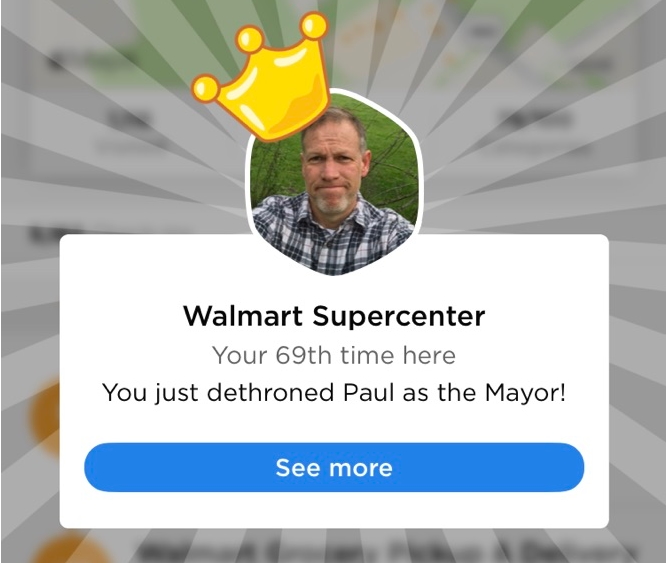
I laughed at my Foursquare screen on Sunday morning. (see pic at right) With Harold Camping being shown to be a false prophet again, you’d think folks would learn that the Bible is completely reliable. There’s that pesky little verse in Matthew 24.36 where Jesus says, “But concerning that day and hour no one knows, not even the angels of heaven, nor the Son, but the Father only.”
Harold keeps trying to get around that, and after a few days in self-imposed exile last Sunday-Monday, he emerged saying he was off, but only by a few months. The earth will be obliterated on October 21 now. Don’t hold your breath.
There are some good things that Camping’s craziness provoked, however. One is that it allowed Christians to discuss matters of eternity, heaven and hell in mainstream conversations. It also showed us again the trustworthiness of scripture (and again, it challenges us to call a false prophet a false prophet). Let’s not be mealy-mouthed about that.
But the prophet who presumes to speak a word in my name that I have not commanded him to speak, or who speaks in the name of other gods, that same prophet shall die.’ And if you say in your heart, ‘How may we know the word that the LORD has not spoken?’—when a prophet speaks in the name of the LORD, if the word does not come to pass or come true, that is a word that the LORD has not spoken; the prophet has spoken it presumptuously. You need not be afraid of him. (Deuteronomy 18:20-22 ESV)
Two articles I saw this past week were especially insightful:
- TJ Scott’s Harold Camping and the May 21st prediction
- Phil Cooke’s What Harold Camping got right
Personally, I knew Jesus wasn’t coming back on Camping’s timetable. However, He is coming back. We see the birth pangs all around us. Let’s not disdain The Return, only false predictions of it. And let’s pray that false predictions don’t inoculate an unbelieving world to the reality of Judgement Day.
When a super, megachurch is where you want to be…
This week, Darrell Cook and I launched a website that we’ve been laughing about for a long time. It’s called churchplanting123.com. You can follow it on Twitter at churchplant123. Essentially, it’s a sarcastic, tongue-in-cheek look at the world of church planting. We plan on making it a video blog with regular updates.
Go here to view the first installment called “The Name.”
Evolution
I’ve been doing a ton of research and reading on evolution … (again). This is probably the fourth or fifth time that I’ve devoted time to review latest writings and claims from multiple perspectives. Stay tuned here for reflections and thoughts. Go here for the last entry on the topic – Tackling Runaway Evolution. When I post my next entry, you’ll be able to determine if my views have evolved…
It’s a newish app that allows you to post pictures instead of a status. It also includes numerous photo filters for enhancing your shots. It allows you follow folks and to like or comment on their pictures. Very nice, streamlined app. There are also a number of web apps for those of you who don’t have a phone that supports Instragram so that you can at least get your photo fix from your favorite snapper. (Gramfeed, Webstagram) My personal feed at Webstragram is here.
From this past week:
Possibly Related Posts:
From bin Laden to baptism
It’s been an eventful week…
On Sunday night, May 1, 2011, President Barrack Obama announced to the nation and world what social media had begun to viralize as news just hours before – that Usama bin Laden was dead. As we now know, he had been killed days earlier on a secret mission by a Navy SEALS unit.
The announcement sent Twitter and Facebook smoking with traffic. The internet was humming with the news as world citizens either celebrated or pontificated on his death.
It didn’t take long for American-flag-waving citizens to gather outside the White House, at Ground Zero or in bars around the country. Emotions ranged from extreme jubilation to quiet reflection on how so many could celebrate someone’s death.
As a pastor, I wrestled with the implications of it all, as did many other Christians. Some of the best articles I’ve seen on a biblical response to Osama’s death this past week were written by John Piper and Michael Kelley (Michael’s entry also links some other thoughtful responses).
I think Proverbs 28:28 has been proven true in the aftermath of 9/11:
When the wicked rise, people hide themselves, but when they perish, the righteous increase.
In the ongoing war on terror, every country has had to “turtle.” The world has lost its innocence in the last 10 years due to the manifest hatred of radical Islam. Goodbye Happy Days. Hello TSA.
The shocking news of Osama’s death replaced tornados and floods as headliners this week – even though recovery, funerals and grief are so prominent in our nation as a result.
And so the week began.
Today I celebrated the spiritual birth of a new believer. He had come to the U.S. for a special educational program that only lasted two weeks. While here, he was assigned a language partner who goes to our church and shared with him the hope that all peoples can have through a love relationship with Jesus Christ. He believed and surrendered control of his life in faith to follow Christ.
Because he leaves in the wee hours of Sunday, I was contacted by a student to ask if we could baptize him. We readily agreed to do that, and this afternoon, in our portable tub, a small crowd gathered to celebrate new life and obedience.
What a week. Osama bin Laden’s death brought closure in so many different ways. But his death cannot give hope. As the student today was immersed in baptism, I celebrated what the death of Christ made possible for all who believe. Hope. Life. Full and eternal.
How was your week?
Possibly Related Posts:
Productivity and ToDo app addiction
I confess. I’m always on the lookout for the best task management apps. I’ve tried almost all of them. Things. Omnifocus. All the ones with “ToDo” or “Tasks” in the name. Even one that promised to be just “awesome” called Awesome Notes. They all do what they promise. They provide a nice blank space for you to enter your tasks and projects… and then ignore them after they’ve been entered.
That’s my problem. I don’t have any problem entering my todo lists. In fact, I embarrassingly admit to having copied my entire todo list before and just copied it into various apps to see how they manage, list and coordinate my tasks. I’ve read David Allen’s infamous Getting Things Done. I know all the right principals of project and task management.
I just don’t practice them. Much.
However, after reading a recent article on the importance of not multitasking, I’ve embraced task management with renewed fervor, and I’ve got a system working right now that seems to have me on the right track. So, without any further ado, here’s my Miraculous System to End Multitasking and Use Apps to Help Me Be More Focused (MSEMUSHMBMF):
SimpleNote. It has a website that syncs with the apps of the same name that I have on both my iPhone and iPad. It’s become the repository for meetings notes, ideas, blogging material, collections, quotes, etc. You can tag the entries, and so far, my tags are: devotional, bible, discipleship, meeting, staff, idea, later, sermon, song, email, writing, thoughts, death, giving, and thanks. (Not that you’d want to know). However, by tagging your entries (and I’m going to have to refine my system in general categories, you are able to catalog the randomness of it all)
2Do. Very nice and attractive app on my iPhone and also a version for my iPad that has been worth the money. It syncs with a website called toodledo.com which I’ve now set as my default homepage. So when I start my browser up, my tasks and projects are there.
How they interact.
- I regularly (usually twice a week) spend about 15 minutes moving things that aren’t really tasks out of 2Do into SimpleNote by copying and pasting. Sometimes I’ll find an idea that it’s time to implement in SimpleNote which now becomes a task and makes its debut in 2Do.
- I use the 5-minute principle of GTD on my task lists. If there’s something there that I can get done in 5 minutes, I do it immediately as the first thing every day. I try to limit that to 2-3 tasks, otherwise I’ll be wrapped up doing nonessentials (most of them are).
- Every time that I have “downtime” in my day, I come back to both apps for a refresher to organize my thoughts or to schedule my next work sessions. Many times, I’ll simply say, “Enough for the day,” and move into “people” mode.
The People Principle
I try to remember, “Don’t be productive at the expense of people.” A meeting with a person is not a task. (Ok, some people are a chore to be with, but in general…) It’s not right to mark off a person as if they were something to “get through with.” When you’re allowing your schedule to master you rather than vice versa, your attitude toward people gets skewered. When you sense that happening, it’s time to back up and reevaluate.
Feed my addiction… what productivity apps are you using? What does your workflow look like?
Possibly Related Posts:
About
Recent Posts
Lifestream
-
RT @davefarris: Here I am...Send me http://t.co/ldphq1Kp // Great post from a church after in process. Grateful for @northstarfamily. [journeyguy]
-
Donuts and social media http://t.co/jYBBxLm8 [journeyguy]
-
RT @edstetzer: Religious groups have always had equal access to public buildings. That changes this weekend. -- http://t.co/cq4CI0sc [journeyguy]
-
-
Writing reflections http://t.co/6jCSXrei [journeyguy]


Notes from the Trail


Feeling sweet?
Copy this number: 6058013378446529, and then